Phone: +86 13712049800
E-mail: karen@watatspets.com
Add: 1002, Unit 2, Building 6, Yandong Community, Fengcheng Eighth Road, Xi'an, Shaanxi, China
US Pet Industry 2026 Trends
The US pet industry continues its resilient expansion, defying macroeconomic headwinds to reach new spending milestones. According to the American Pet Products Association (APPA), 2025 marked a significant milestone with total pet industry expenditures hitting $158 billion, representing a 3.7% year-over-year increase. Leading this growth surge is the pet supplies and pharmaceuticals segment, which recorded the fastest growth rate at 4.4% YoY. As we analyze the 2026 landscape, three core themes dominate: sustained market expansion, accelerating pet humanization, and innovative product development reshaping the pet supplies market. Market Overview: 2025 Performance Sets Strong Foundation for 2026The US pet industry has maintained an impressive growth trajectory over the past decade, nearly doubling in size from $90.5 billion in 2018 to $158 billion in 2025. This growth demonstrates remarkable resilience, even during periods of economic uncertainty, as pet ownership and spending have become deeply ingrained in American culture. 2025 Total Expenditure Breakdown (APPA Data) Pet Food & Treats: $68.3 billion (43.2% of total, +3.0% YoY) Veterinary Care & Product Sales: $41.0 billion (25.9% of total, +3.0% YoY) Pet Supplies, Live Animals & OTC Medicine: $34.4 billion (21.8% of total, +4.4% YoY – fastest growing segment) Other Services (boarding, grooming, insurance, etc.): $14.3 billion (9.1% of total, +8.0% YoY) The 2025 results exceeded initial projections of $157 billion, signaling stronger-than-expected consumer confidence in pet-related spending. For 2026, APPA projects total industry sales will **surpass $165 billion, with an estimated growth rate of ~4.4%**. Approximately 2 percentage points of this growth will be driven by inflation, while the remaining 2.4% will come from real demand expansion.
Long-Term Growth Trajectory (2018–2026)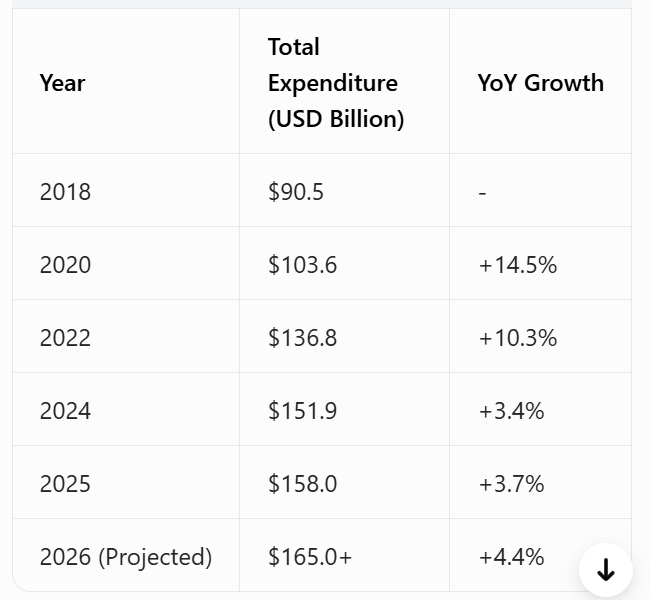
This consistent growth underscores a fundamental shift in consumer behavior: pets are no longer just companions but integral family members, driving sustained investment in their health, wellness, and lifestyle.
Pet Humanization: The Core Driver of Market Growth
Pet humanization – the trend of treating pets as family members – remains the primary catalyst for industry expansion. This cultural shift has transformed consumer spending patterns, with owners increasingly prioritizing premium, human-grade products and services for their furry companions. Key Pet Humanization Statistics 70% of US households own a pet, representing approximately 90.5 million homes Millennials account for 33% of pet ownership, while Gen Z adoption rates are rising rapidly 61% of cats and 59% of dogs in the US are considered overweight or obese, driving demand for specialized nutrition and fitness products 46% of pet owners spend more on premium pet food than on their own groceries 82% of pet owners view their pets as family members, not just animals.
How Pet Humanization Impacts Spending
The humanization trend has led to a "premiumization" of the pet supplies market, with consumers willing to pay more for products that align with human health and wellness standards: Human-grade pet food: Sales reached $6.58 billion in 2025, growing at 19% YoY Functional supplements: Joint support, probiotics, and calming aids are among the fastest-growing categories Luxury accessories: Designer collars, orthopedic beds, and smart pet devices are no longer niche products Preventive healthcare: Pet insurance adoption has grown 23% since 2023, with 4.6 million pets insured in 2025 This shift toward human-like care has elevated the pet supplies market from a commodity-driven industry to one focused on quality, innovation, and emotional connection.
2026 Key Trends Shaping the Pet Supplies Market
1. Smart Pet Tech & ConnectivityThe integration of technology into pet care is accelerating, with smart devices becoming mainstream. The North American pet tech market was valued at $8.6 billion in 2025 and is projected to reach $29.7 billion by 2035, growing at a 12.2% CAGR. Key products include:
Automatic feeders & water fountains: With portion control and app connectivity
Pet cameras & monitoring systems: For remote interaction and anxiety relief
GPS trackers & health monitors: To track activity levels and vital signs
Smart toys: Interactive devices that combat boredom and promote mental stimulation
These products address the growing need for pet owners to stay connected with their pets despite busy lifestyles, turning "absence into presence" through technology.
2. Sustainable & Eco-Friendly Products
Sustainability has become a critical purchasing factor for modern pet owners, particularly millennials and Gen Z. In 2025, sustainable pet products grew 18.6% YoY, contributing 2.5% of total pet care sales. Key trends include:
Biodegradable & compostable materials: For litter, waste bags, and bedding
Upcycled & recycled products: Toys, beds, and accessories made from post-consumer waste
Plant-based & natural ingredients: In food, treats, and grooming products
Zero-waste packaging: Refillable containers and minimal plastic usage Brands that prioritize sustainability are not only meeting consumer demand but also aligning with broader environmental goals, creating a competitive advantage in the market.
3. Breed-Specific & Personalized Products
As pet ownership becomes more diverse, demand for breed-specific and personalized products is surging. Owners are seeking tailored solutions that address the unique needs of their pets: Breed-specific nutrition: Formulated for size, age, and health predispositions Customized accessories: Collars, beds, and toys designed for specific breeds and temperaments Personalized healthcare: DNA testing, allergy-specific diets, and targeted supplements Age-appropriate products: Puppy/kitten, adult, and senior-specific supplies This trend reflects the deep emotional bond between owners and pets, as consumers increasingly view their pets as individuals with unique needs and preferences.
4. Health & Wellness FocusPreventive healthcare and wellness have become top priorities for pet owners, driving growth in the health and wellness segment: Functional treats & chews: Joint support, dental care, and anxiety relief CBD & calming products: For stress, pain, and behavioral issues Dental care products: Toothbrushes, toothpaste, and dental chews Fitness & exercise equipment: Treadmills, agility courses, and interactive toys The focus on pet health is closely tied to the humanization trend, as owners seek to provide their pets with the same level of care they would give themselves.
5. E-Commerce & Omnichannel Dominance
The pet supplies market has experienced a significant shift toward e-commerce, with online sales accounting for 42% of total pet care sales in 2025. Key trends include: Subscription models: 21% of pet households use subscription services for food, treats, and supplies Direct-to-consumer (DTC) brands: Disrupting traditional retail with innovative products and personalized customer experiences Omnichannel integration: 82% of pet care expenditures come from omnichannel consumers, who shop both online and in-store Same-day delivery & curbside pickup: Convenience-driven services that enhance the customer experience E-commerce has not only expanded market reach but also allowed brands to collect valuable consumer data, enabling more targeted marketing and product development.