Phone: +86 13712049800
E-mail: karen@watatspets.com
Add: No. 2220, 22nd Floor, Building A, Xi'an International Enterprise Center, Fengcheng 4th Road, Jingkai District, Xi'an City, Shaanxi Province
The Death of the Mid-Range Pet Product: How "Affordable Premium" Is Reshaping Wholesale Bu
The Death of the Mid-Range Pet Product: How "Affordable Premium" Is Reshaping Wholesale Buying in 2026
The mid-range pet product is in trouble. Not the cheap end. Not the true premium end. The middle—the $40 bed that is not quite orthopedic, the $15 jacket that is not quite waterproof, the product that exists because it was easy to make, not because a consumer needed it.
Euromonitor puts global pet care retail value at roughly $225 billion in 2026, growing 5% year-on-year in current terms. But that headline hides a structural split. Value gains are outpacing volume growth as affordability pressures constrain spending. Premium segments remain the fastest growing, but their expansion is narrowing. Consumers still want better products for their pets. They are simply unwilling to pay the traditional premium price to get them.
That gap is where "affordable premium" lives. Euromonitor describes it as embedding functional benefits at more accessible price points to retain trading-up potential. For B2B buyers, it is not a marketing phrase. It is a product selection problem that decides whether a SKU sells through or sits.
The middle is being hollowed out
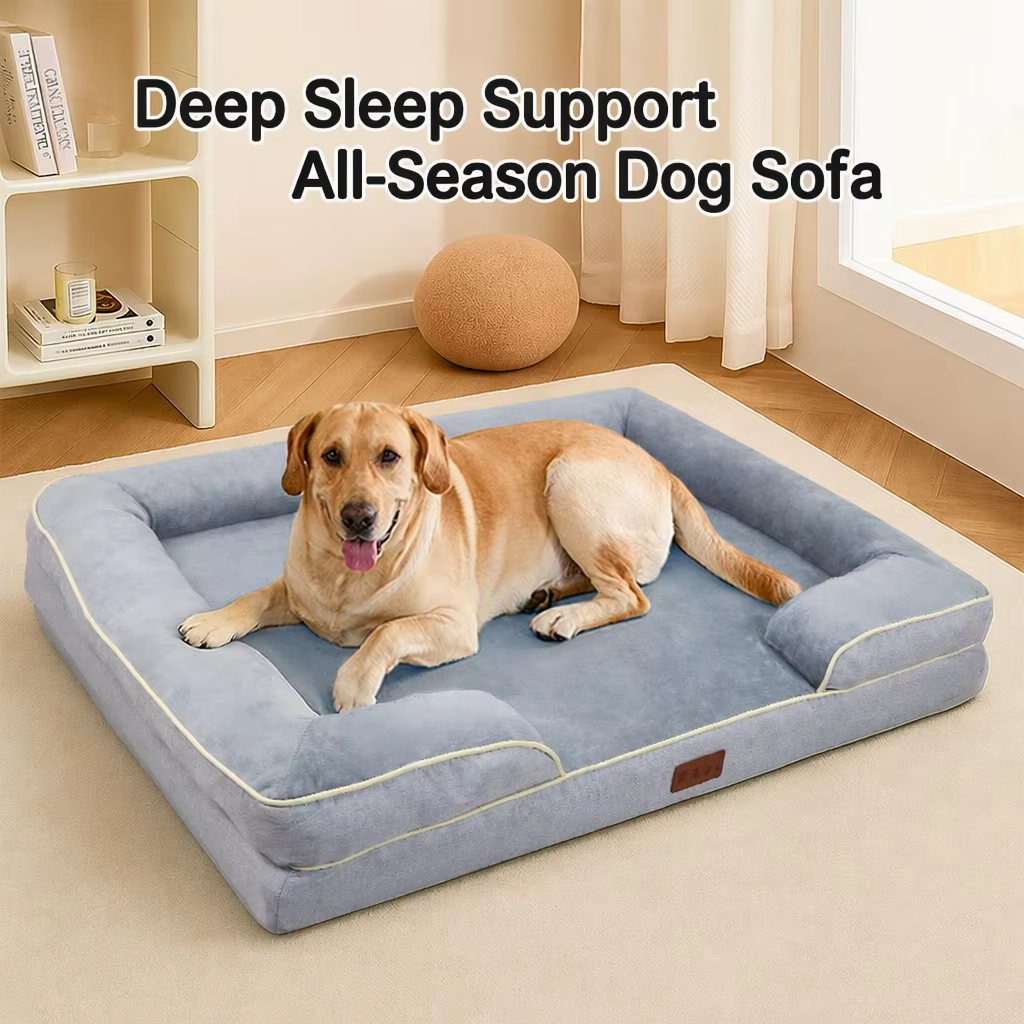
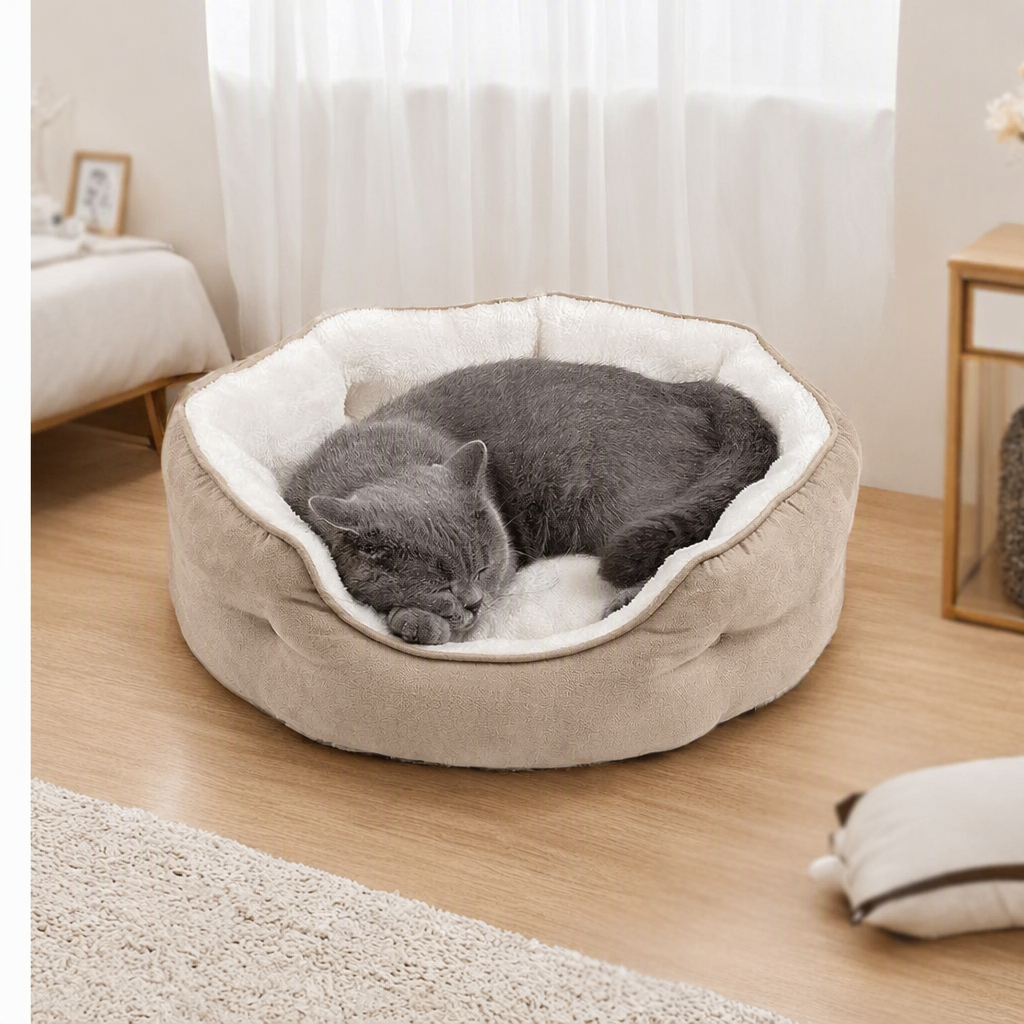
Pet bed wholesale price data shows the spread clearly. Blankets start around $13. Higher-end bed styles run past $170. The tier that is getting squeezed is the mass-market core—roughly $25 to $75 at retail—where most private-label beds have historically lived. It is too expensive to compete on price with ultra-value imports, and too thin on features to justify a premium shelf position.
The same squeeze is visible in pet apparel. A basic fleece shirt at $1.58–$1.76 wholesale has a role in seasonal impulse buys. But it competes with hundreds of identical SKUs. The buyers growing their apparel category are not adding more of those. They are replacing three cheap styles with one jacket that has a real functional claim: water-resistant shell, reflective trim, adjustable fit. At wholesale, it costs more to make. At retail, it sells at a price the pet owner was already prepared to pay for a "good" jacket—just not a designer one.
[See our affordable-premium pet bed and apparel specs for US and EU buyers →]
What "affordable premium" actually means in product terms
It does not mean luxury materials at a discount. It means visible, testable function that a retailer can explain on a shelf tag in one sentence.
For pet beds, that means orthopedic memory foam that holds density after 30 wash cycles, not just "soft filling." A removable cover with a hidden zipper and a non-slip base. A size range from small to XXL that covers the actual dog population, not just small breeds. The cost difference against a mid-range bed is smaller than most buyers assume. The retail price difference is not.
For pet apparel, it means a shell that actually blocks wind, a lining that does not pill, and a fit that stays on a moving dog. A $6–$8 wholesale jacket with these features retails at $25–$35 in the US and €22–€30 in Europe. A $2 wholesale shirt retails at $8–$10 and returns at a higher rate because it does not fit, does not last, or does not do what the photo implied.
The margin math favors fewer, better SKUs. A mid-range bed that returns at 12% destroys more margin than an affordable-premium bed that returns at 4%, even if the wholesale cost is 30% higher.
[Request our affordable-premium product line and wholesale price sheet →]
Why this is a B2B sourcing problem, not a retail pricing problem
Retailers can set any price they want. What they cannot do is create a product that justifies it. That has to come from the supply side.
Three things separate a supplier who can execute affordable premium from one who is simply selling stock at a slightly higher price.
First, material discipline. Memory foam density, shell fabric weight, zipper brand, stitching reinforcement. These are not marketing details. They are the cost drivers that determine whether a bed holds shape and a jacket survives a winter. A supplier who cannot document these specs cannot deliver repeatable affordable premium.
Second, MOQ structure. True affordable premium requires some customization—a specific fabric, a size chart adjusted for the destination market, a logo label. Factories that only offer stock at low MOQ cannot support this. Factories that offer custom at 500–1,000 units per SKU can. The legitimate middle ground is a mixed-SKU starter order: several styles, moderate total volume, each SKU at a workable production minimum.
Third, compliance readiness. For EU buyers, affordable premium is not just a price tier. It is a documentation tier. REACH, OEKO-TEX, GPSR responsible person details—these are the documents that let a product sit on a shelf. A supplier who treats compliance as an afterthought turns an affordable-premium SKU into a delayed or rejected shipment.
[Ask for our MOQ tiers and compliance documents for affordable-premium beds and apparel →]
What to cut, what to keep
If you are rebuilding a mid-range-heavy catalog for 2027, the decision is not "premium or cheap." It is "functional or forgettable."
Cut the SKU with no functional story: the plain fleece bed, the unlined fashion jacket, the carrier that exists only because it is cheap. These are the products that get price-matched, returned, and discontinued.
Keep and upgrade the SKU with a clear need state: orthopedic support for aging dogs, weather protection for daily walks, a bed cover that can be washed weekly without losing shape. These are the products that survive a value-conscious consumer because the benefit is visible.
Add one affordable-premium hero per category. Not a full range. One bed, one jacket, one carrier. Prove the sell-through, then expand. That is how a mid-range catalog becomes a margin catalog without betting the quarter.
The takeaway
The consumer has already moved. They want the function. They will pay for the function. They will not pay for the badge. The buyers who win in 2027 are the ones who stop defending the middle and start sourcing for the top of the accessible range—where the product does something, the price makes sense, and the margin holds.